
I have always been interested in the small contradictions between what we believe we are experiencing and what our bodies may actually be doing. We recognise exhaustion when we can no longer concentrate, hunger when we have missed a meal, and physical strain when a muscle begins to hurt. Yet there are other forms of effort that can continue almost unnoticed, particularly when they have become part of the way we work, concentrate or respond to the demands of everyday life.
The human jaw offers a surprisingly useful example. Long after a difficult meeting has ended, a complicated decision has been made or the computer has been switched off, the muscles responsible for bringing our teeth together may still be contracted. We may be sitting comfortably, enjoying a conversation or watching television, without recognising that we are continuing to exert pressure through muscles that have no immediate reason to be working.
What interests me about this behaviour is not the clenching itself, which is reasonably well understood in dentistry, but the larger question it raises about our awareness of the body. We generally assume that when we feel relaxed, the physical processes associated with effort have also subsided. That assumption is not always reliable, and it has important implications for how we understand the relationship between attention, habit and physiological regulation.
THE PHYSICAL HABITS WE STOP NOTICING
Think about the way people behave when concentrating intensely on a task. Someone working through a difficult spreadsheet may lean towards the screen, narrow their gaze and hold their shoulders in a slightly elevated position. A person preparing for a challenging conversation may become unusually still, while someone driving through heavy traffic may grip the steering wheel with considerably more force than the situation requires.
Most of these adjustments happen without deliberate instruction. They are part of the ordinary relationship between attention and movement, and they do not necessarily indicate anxiety or an abnormal physiological condition. The body continually organises muscular activity around what we are trying to accomplish, often without bringing those adjustments into conscious awareness.
The difficulty is that repeated patterns can become familiar enough to escape notice. Someone who spends years working at a computer may eventually recognise that the discomfort in their neck or shoulders is related to the position they maintain while concentrating. Until that connection becomes apparent, the discomfort may be treated as an isolated problem rather than a consequence of a repeated behaviour.
Jaw clenching can develop a similar invisibility. The activity may accompany concentration, emotional tension or a habitual response that has become established over time. Because we do not normally pay attention to the muscles of the jaw unless we are eating, speaking or experiencing discomfort, we may remain unaware of their activity until something draws our attention to it.
WHY THE JAW CAN REMAIN ACTIVE WHEN WE FEEL CALM
Dentistry recognises repetitive or sustained jaw-muscle activity through the concept of bruxism, which includes behaviours such as clenching, grinding and bracing the jaw. Researchers distinguish between awake bruxism and sleep bruxism because the circumstances in which they occur, and some of the mechanisms involved, are different.
Awake bruxism can involve sustained tooth contact or muscular bracing during ordinary waking activities. It is often associated with psychological factors, including stress, but it can also involve habitual patterns of muscular activity. Sleep bruxism has a different and more complex relationship with sleep physiology, and it would be misleading to assume that every person who clenches their teeth during the day is experiencing the same underlying process as someone who grinds their teeth at night.
An important development in the scientific understanding of bruxism is the recognition that the behaviour should not automatically be treated as a medical disorder. Its significance depends partly on whether it contributes to problems such as tooth damage, jaw pain, headaches or muscular fatigue. Occasional clenching and persistent, harmful grinding are not interchangeable conditions.
This distinction matters because there is a temptation, particularly in conversations about stress and the nervous system, to turn an everyday physical observation into evidence of an underlying dysfunction. A clenched jaw may be associated with tension, but it cannot by itself establish that someone is anxious, hypervigilant or experiencing sustained autonomic activation.
We need to be equally careful about the opposite assumption. A person who reports feeling calm may still be maintaining muscular tension, just as someone who has adapted to prolonged demands may no longer consciously register every physical adjustment accompanying those demands. Our subjective experience remains important, but it does not provide a complete account of everything happening in the body.
THE QUESTION THAT LED ME TOWARDS NEURAGRIP
Over the years, much of my work has involved understanding complicated systems and finding ways to make them easier to interpret. Whether I was dealing with business operations, technology or the development of preventive health platforms, I repeatedly encountered the same underlying challenge: what appears straightforward at the surface can be influenced by processes that are difficult to observe directly.
My interest in human physiology developed along a similar line of inquiry. As we began working with physiological measurement through MI.BO., I became increasingly interested in the difference between what people believed they were experiencing and what could be observed through measurable signals. That distinction eventually became an important part of the thinking behind YOU ARE NEURAGRIPPED.
The book explores a question that has continued to occupy me: what happens when a difficult situation has ended, yet some elements of the body's preparation or protective behaviour appear to continue?
I use the term NeuraGrip to examine the possibility that aspects of physiological readiness may persist beyond the circumstances that originally encouraged them. Within that framework, autonomic bracing describes a proposed pattern of continued preparation or guarding, rather than an established medical diagnosis. These ideas draw on recognised principles of stress physiology, muscular behaviour and autonomic regulation, while remaining distinct from clinical conditions that have their own accepted definitions and diagnostic criteria.
The jaw is an interesting place to begin considering this distinction because its activity can sometimes be observed without instruments. If someone discovers that they habitually clench while concentrating, the immediate finding concerns muscular behaviour. Whether stress, learned habit, medication, sleep disturbance or another factor contributes to that behaviour requires a separate assessment. It would be scientifically unjustified to infer a persistent defensive autonomic state from the jaw alone.
Nevertheless, the observation can encourage a more useful kind of curiosity about the body, particularly when similar patterns appear in posture, breathing or other behaviours that accompany prolonged concentration.
WHEN THE WORK HAS ENDED BUT THE EFFORT CONTINUES
There is a particular moment in the evening that captures the issue rather well. The last message has been answered, the laptop has been closed and whatever required our attention during the day has, at least temporarily, been put aside. We settle into a chair with the reasonable belief that we have finished working.
Yet the transition from concentrated activity to physical relaxation is not necessarily instantaneous. A posture held throughout the afternoon may take time to change, and a familiar muscular habit may continue until we become conscious of it. The jaw may remain firmly closed even though we are no longer doing anything that requires pressure between the teeth.
It is tempting to attach a dramatic explanation to this moment, but I think the more useful approach is to begin with what we can actually establish. A muscular pattern has continued beyond the activity with which we associate it. We can recognise the pattern, observe whether it recurs and determine whether it is causing discomfort. Only then does it become sensible to consider possible explanations.
This approach reflects an important principle in my work. Observation should precede interpretation, particularly when we are dealing with complex biological systems in which several different mechanisms can produce similar outward signs.
A SMALL EXPERIMENT IN AWARENESS
There is a simple way to become more familiar with this behaviour during the course of an ordinary day. Without deliberately changing your expression, notice how your jaw is positioned while you are reading, working at a computer or concentrating on a conversation. Pay attention to whether your teeth are being pressed together and whether the muscles around your cheeks or temples seem unnecessarily active.
When the jaw is comfortably at rest, the upper and lower teeth are generally slightly separated. If you find yourself clenching, allowing the teeth to separate gently may help you become aware of the difference between your habitual position and a more relaxed one. There is no need to force a movement, perform an exercise or attempt to produce a particular physiological response.
What makes this observation useful is the possibility of recognising when the behaviour occurs. You may discover that you clench during demanding work but rarely when walking outdoors, or that the habit appears during periods of concentration without any obvious feeling of anxiety. You may also discover that you do not clench at all, which is equally informative.
I would not encourage constant self-monitoring, because repeatedly checking the body can itself become an unhelpful source of concern. A few occasional observations are sufficient to determine whether there is a pattern worth exploring.
Persistent jaw pain, headaches, tooth sensitivity, damaged teeth or grinding noticed by a sleeping partner should be discussed with a dentist. Such symptoms deserve a conventional clinical assessment, including consideration of dental, muscular, medication-related and sleep-related factors where appropriate.
WHAT THIS TELLS US ABOUT LIVING ON ALERT
One of the reasons I wrote YOU ARE NEURAGRIPPED was my growing conviction that our understanding of health needs to include the way people experience and regulate the demands of ordinary life. We have become increasingly sophisticated at measuring isolated physiological variables, yet we still have much to learn about interpreting those measurements alongside behaviour, circumstances and personal experience.
A heart rate reading, for example, becomes more useful when we know whether someone has been walking, resting, speaking or recovering from exertion. The same principle applies to a physical behaviour such as jaw clenching. Without context, it is easy to assign a meaning that the observation cannot support.
Hypervigilance is an established clinical term describing heightened monitoring for possible threats, often discussed in relation to anxiety and trauma-related conditions. The broader question of persistent physiological readiness overlaps with aspects of that literature, but it should not be assumed that ordinary muscular tension is evidence of hypervigilance.
My interest lies in examining these relationships without collapsing them into a single explanation. There are circumstances in which people consciously recognise that a difficult period has passed while continuing to experience physical discomfort, disturbed sleep or patterns of tension that deserve attention. Understanding those experiences requires an appreciation of both established physiology and the limitations of what we can conclude from individual symptoms.
For readers interested in the distinction between hypervigilance, perceived threat and sustained readiness, I have developed a separate educational resource at NeuraGripped.com, where these concepts are examined in greater detail.
LEARNING TO RECOGNISE WHAT HAS BECOME FAMILIAR
As I grow older, I find myself increasingly interested in the ordinary behaviours that shape the quality of our daily lives. Longevity is often presented through the language of sophisticated interventions, biological age and increasingly precise measurements, all of which can contribute to our understanding of health. But those developments should not cause us to overlook the less dramatic questions about how we sit, move, concentrate, recover and carry physical effort through the day.
I would not suggest that relaxing the jaw will improve longevity or that every persistent muscular habit reflects a problem with the autonomic nervous system. Neither claim would be justified by the available evidence. What I do believe is that learning to recognise habitual physical behaviour can help us make more informed decisions about our comfort, our working environment and, when necessary, the professional advice we seek.
The jaw is only one example, but it illustrates something I consider important about self-understanding. We can become so accustomed to a particular way of using the body that it no longer registers as effort. It may take a moment of deliberate attention, or sometimes the appearance of discomfort, before we recognise how much muscular activity has become part of our normal routine.
The next time you close your laptop at the end of a demanding day, it may be worth noticing whether your jaw has settled along with the rest of your activity. There is no need to search for a hidden problem or attach a complicated explanation to what you find. The value lies in recognising a behaviour that may otherwise have continued without your awareness, and allowing that observation to inform a more thoughtful understanding of how you live and work.
FURTHER READING AND SCIENTIFIC CONTEXT
The clinical distinction between awake and sleep bruxism, including their assessment and possible consequences, is discussed in the National Institute of Dental and Craniofacial Research guidance on bruxism and in the international consensus on the assessment of bruxism. These sources provide the established scientific context for the jaw-muscle behaviours described in this article.
The broader NeuraGrip interpretation is an author-developed framework for examining patterns of sustained readiness and should not be understood as a clinical diagnosis or a substitute for professional medical or dental assessment.
Topics in this article
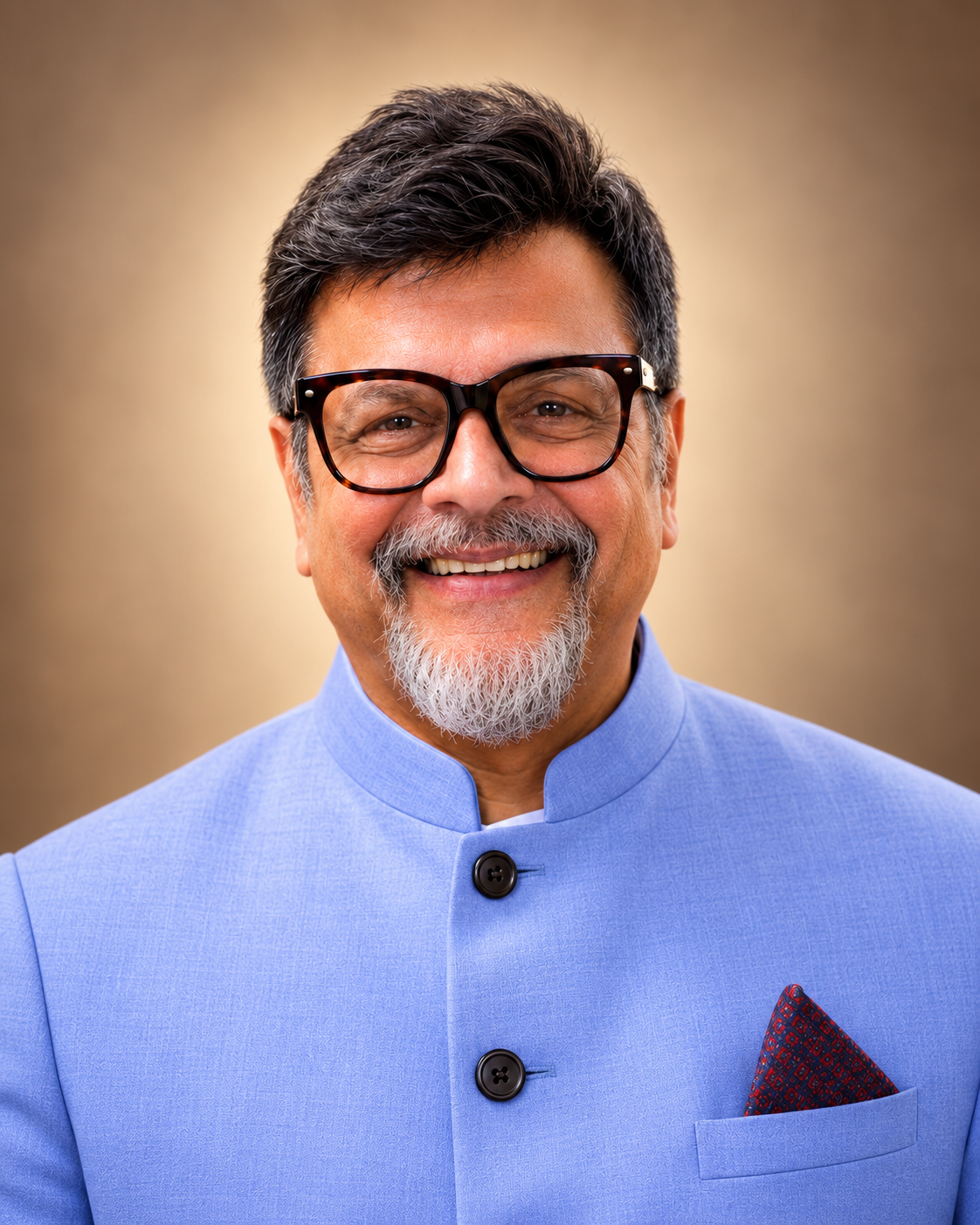
Aseem Gupta is the founder of MI.BO., creator of the NeuraGrip™ framework and author of YOU ARE NEURAGRIPPED.
About Aseem · NeuraGripped.com · MI.BO.life · MIBOSelfie.com